Canadian Symbols and Holidays: Complete Guide for the Citizenship Test
Canadian symbols and holidays represent the country's identity, values, and shared history. They appear frequently on the citizenship test because understanding these symbols demonstrates a genuine connection to what Canada stands for. This guide covers every symbol and holiday you need to know, explains why each matters, and offers practical strategies for remembering the details that show up on test day.
The Canadian Flag
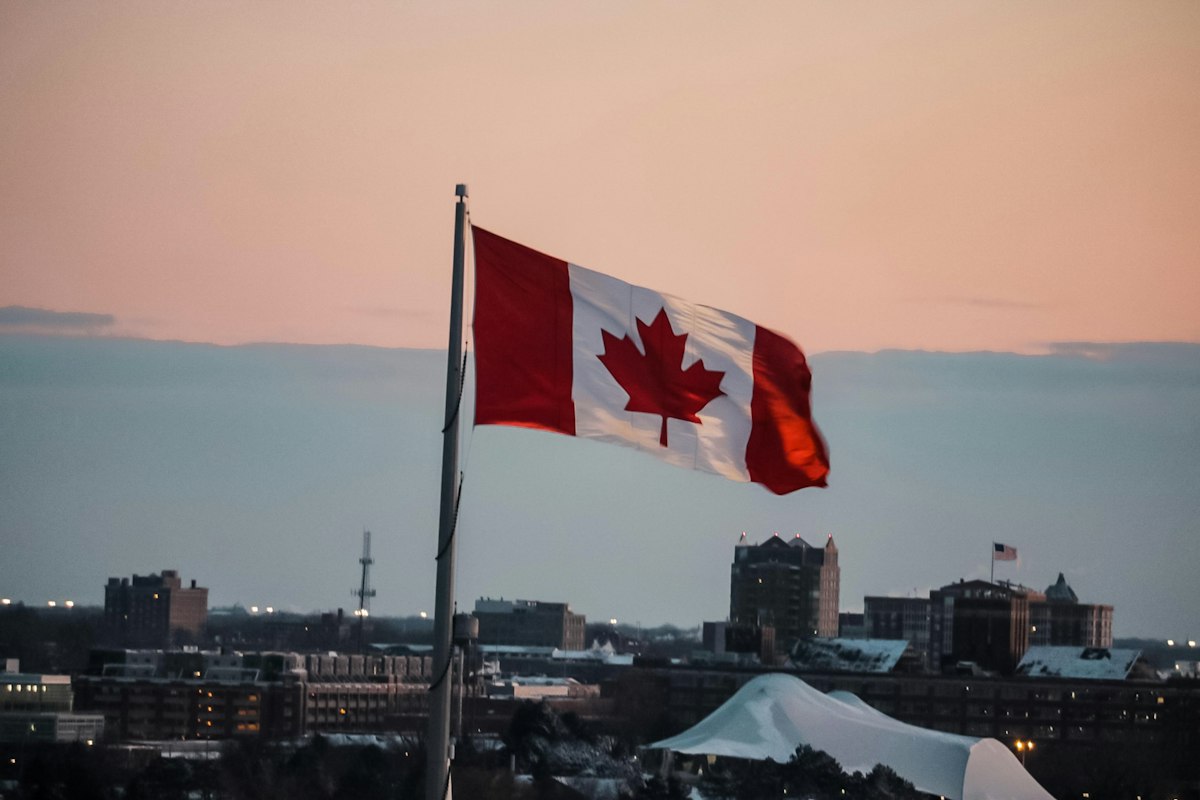
The current Canadian flag - a red maple leaf on a white background flanked by red bars - was adopted on February 15, 1965. Before that, Canada used the Red Ensign, which featured the Union Jack. The adoption of the maple leaf flag was controversial at the time, with heated parliamentary debate lasting months. Prime Minister Lester B. Pearson championed the new flag as a symbol of Canadian unity and independence.
The red and white colours have been Canada's official colours since 1921, proclaimed by King George V. The maple leaf itself has been associated with Canada since the 1700s and appeared on early Canadian coins. February 15 is now celebrated as National Flag of Canada Day. For the test, remember the year 1965 and the connection to Lester B. Pearson - both are commonly tested facts.
O Canada: The National Anthem
O Canada was originally composed in 1880 by Calixa Lavallee with French lyrics by Adolphe-Basile Routhier. The English version, written by Robert Stanley Weir, came later. Although it had been sung at public events for decades, O Canada did not officially become the national anthem until July 1, 1980 - more than a century after it was first performed.
The lyrics speak of patriotic love, the True North, and standing on guard for Canada. The phrase "True North strong and free" captures the Canadian identity of northern resilience and liberty. For the citizenship test, you should know the opening lines in either English or French, the year it became official (1980), and the name of the original composer (Calixa Lavallee). Some test questions ask about specific phrases in the anthem, so reading through the full lyrics at least once is worthwhile.
The Royal Anthem: God Save the King
As a constitutional monarchy, Canada also has a Royal anthem - God Save the King (or Queen, depending on the reigning monarch). This anthem is played on occasions involving the Crown, such as royal visits or certain official ceremonies. While O Canada is heard far more frequently, understanding that Canada has two anthems reflects the country's constitutional structure. The test may ask about Canada's system of government and its connection to the Crown, making the Royal anthem relevant background knowledge.
The Beaver
The beaver was officially recognized as a symbol of Canadian sovereignty in 1975, but its significance stretches back centuries. The fur trade - driven largely by demand for beaver pelts to make felt hats in Europe - was the economic foundation of early Canada. The Hudson's Bay Company, founded in 1670, built its empire on beaver fur. French and English traders established relationships with Indigenous peoples through the beaver trade, shaping the country's early development.
The beaver appears on the Canadian nickel (five-cent coin) and is one of the most recognizable Canadian symbols worldwide. For the test, remember that the beaver's importance is directly tied to the fur trade and its role in Canada's economic history.
The Maple Leaf
The maple leaf has been a Canadian symbol since at least the 1700s and appears on the flag, the coat of arms, and the one-cent coin (before it was discontinued). Maple syrup production is a significant Canadian industry, with Quebec producing roughly 70% of the world's supply. The maple leaf's association with Canada predates Confederation and has been used by Canadian military units, sports teams, and government institutions for over two centuries.
The Crown and the Coat of Arms
Canada's official coat of arms features the royal crown, the maple leaf, the fleur-de-lis, the Irish harp, the Scottish thistle, and the English lions - reflecting the country's founding peoples from France and the British Isles. The motto "A Mari Usque Ad Mare" means "From Sea to Sea," a reference to Psalm 72:8 and Canada's vast geography stretching from the Atlantic to the Pacific. This motto is sometimes tested, so remember the Latin phrase and its English translation.
Canada Day - July 1
Canada Day celebrates the anniversary of Confederation on July 1, 1867, when the British North America Act united Ontario, Quebec, Nova Scotia, and New Brunswick into the Dominion of Canada. It is the most important national holiday and is marked by fireworks, parades, concerts, and community celebrations across the country. Ottawa, the national capital, hosts the largest official celebration on Parliament Hill. For the test, knowing that Confederation occurred on July 1, 1867, and the original four provinces, is essential.
Remembrance Day - November 11
Remembrance Day honours Canadian soldiers and veterans who served in wars and peacekeeping missions. It falls on November 11, marking the armistice that ended World War I in 1918. Canadians wear red poppies in the weeks leading up to the day, a tradition inspired by the poem "In Flanders Fields" written by Canadian military doctor Lieutenant Colonel John McCrae in 1915 during the Second Battle of Ypres. The poem's opening lines - "In Flanders fields the poppies blow / Between the crosses, row on row" - are among the most famous in Canadian literature.
At 11:00 a.m. on November 11, Canadians observe a moment of silence. The National War Memorial in Ottawa is the site of the main ceremony. For the citizenship test, remember the date, the significance of the poppy, and the connection to John McCrae and "In Flanders Fields."
Victoria Day
Victoria Day is celebrated on the Monday before May 25 and honours Queen Victoria, who is often called the "Mother of Confederation." Queen Victoria chose Ottawa as the capital of the Province of Canada in 1857. Victoria Day also marks the official birthday of the reigning Canadian sovereign. It is an important holiday because it connects Canada's present to its constitutional monarchy traditions. Many Canadians also consider it the unofficial start of summer.
Thanksgiving
Canadian Thanksgiving is celebrated on the second Monday of October, significantly earlier than American Thanksgiving. The holiday has roots going back to 1578 when English explorer Martin Frobisher held a ceremony in present-day Nunavut to give thanks for a safe voyage. It became a national holiday in 1879. Unlike its American counterpart, Canadian Thanksgiving is less about a specific historical event and more about giving thanks for the harvest and the blessings of the past year.
Other Important Holidays and Observances
National Indigenous Peoples Day is celebrated on June 21, the summer solstice. It recognizes the heritage, cultures, and contributions of First Nations, Inuit, and Metis peoples. This date has grown in significance as Canada continues its work toward reconciliation.
Saint-Jean-Baptiste Day on June 24 is a major holiday in Quebec, celebrating French-Canadian culture and heritage. It is a statutory holiday in Quebec and is marked by parades and festivities throughout the province.
National Day for Truth and Reconciliation on September 30 was established in 2021 as a federal statutory holiday to honour the children who never returned home from residential schools and the survivors, their families, and communities. Canadians are encouraged to wear orange on this day.
Memory Strategies for Symbols and Holidays
Group the holidays chronologically through the year: Victoria Day (May), National Indigenous Peoples Day (June 21), Saint-Jean-Baptiste Day (June 24), Canada Day (July 1), Thanksgiving (October), Remembrance Day (November 11), National Day for Truth and Reconciliation (September 30). For symbols, connect each one to a story - the beaver to the fur trade, the maple leaf to the flag debate of 1965, the Crown to the constitutional monarchy. Stories stick in memory far better than isolated facts.
When studying, pay special attention to the dates and names associated with each symbol and holiday. The test loves asking "when" questions - when did the flag change, when did O Canada become official, when is Remembrance Day. If you can answer the "when" for each symbol and holiday, you will be well prepared for this section of the test.
Quiz yourself on Canadian symbols
Our practice test includes questions on symbols, holidays, and cultural knowledge from Discover Canada.
Start Practice Test